
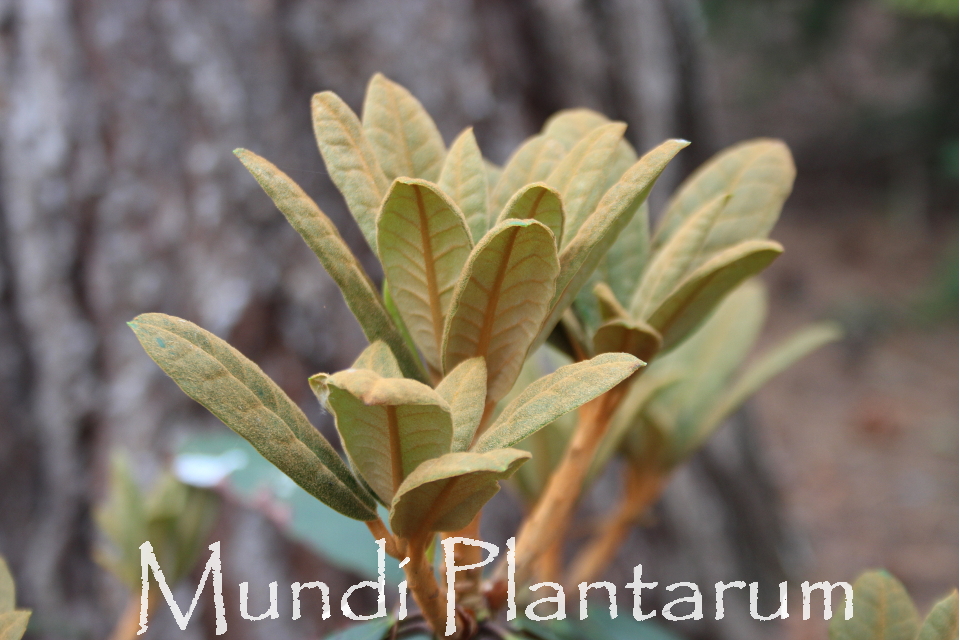
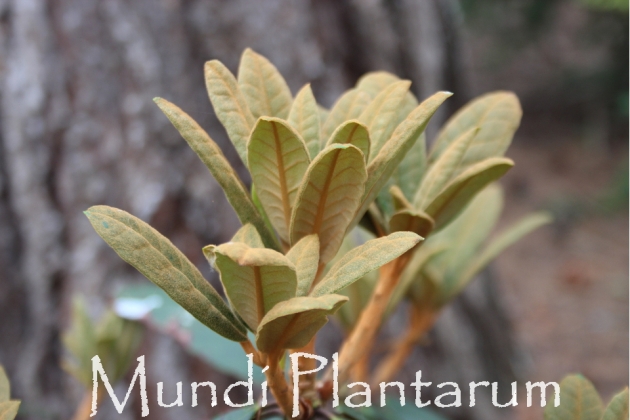
With its beautiful dark green foliage and tawny undersides, this large shrub, or even tree, will find its place in many flowerbeds.
Rhododendron fulvum
Famille:
Ericaceae

Les jardins du florilège
Olivier van Sante
Classification
Trees and shrubsClimate
Zone 7: from -17°C to -12°CLeaf color
- Green
Flower color
- White
- Pink
Sun exposure
- Part shade
Size
3 to 5m
Ornamental interest
- Foliage
- Evergreen
- Flower
Type de sol
- Acidic
GENERAL DESCRIPTION
- ORIGIN: China (Yunnan). Burma, Sichuan, Assam and SE. Xizang at 2400-4400 m.s.
- CLIMAT: Resist to - 15°C.
- EXPOSURE : Partial shade.
- SOIL:
- GROWTH :
- PATHOLOGY:
- PROPAGATION:
- PRUNING:
- USES:
- MERIT: AGM, Award of Garden Merit, 1993.
- NOTE: Here is another rhododendron that is not very widespread and yet deserves more consideration given all the qualities it combines.
GENERAL PHYSIOLOGY
- SIZE: Small tree reaching 6 m (1.5-2 m) in height.
- SHAPE: A relatively compact shrub with a beautiful shape.
- TRUNK:
- BARK:
- BRANCHS :
- NOTE: Genus (Hymenanthes) section (Ponticum)
PHYSIOLOGY OF LEAVES
- SHQPE: Lanceolate leaves approximately 25 cm long.
- COLOR: Green, new growth with a yellow-brown or greyish coating. The underside of the leaves has a very attractive yellowish or cinnamon-coloured indumentum.
- BUDS:
- STOMATS:
- NOTE:
PHYSIOLOGY OF FLOWERS
- PERIOD: March-April.
- SHAPE: Bell-shaped flower,
- COLOR: White to pink, often speckled in the center.
- NOTE: Flowering usually occurs after 10-12 years.
PHYSIOLOGY OF FRUIT
- SHAPE:
- COLOR:
- SEEDS :
- NOTE :