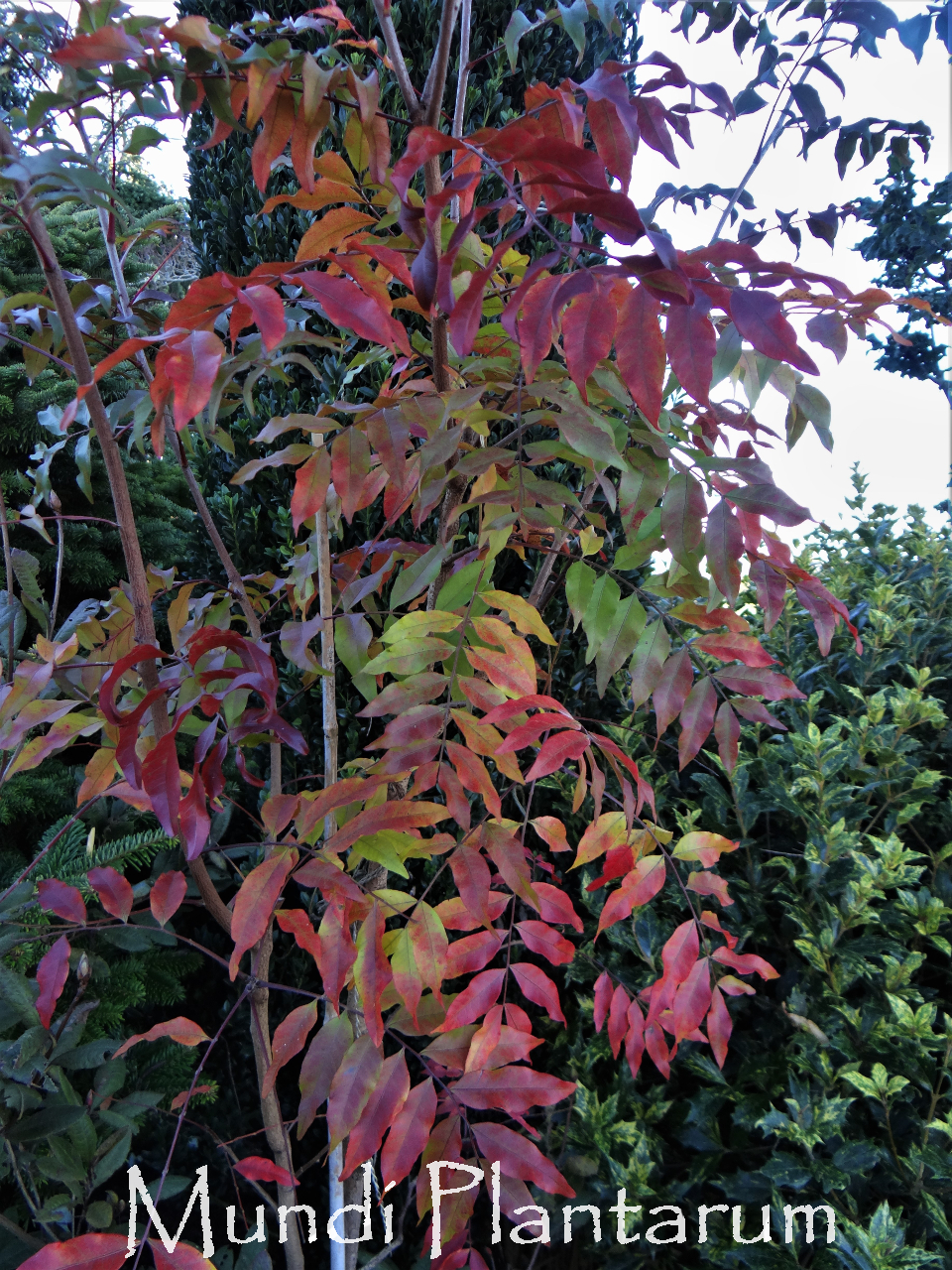
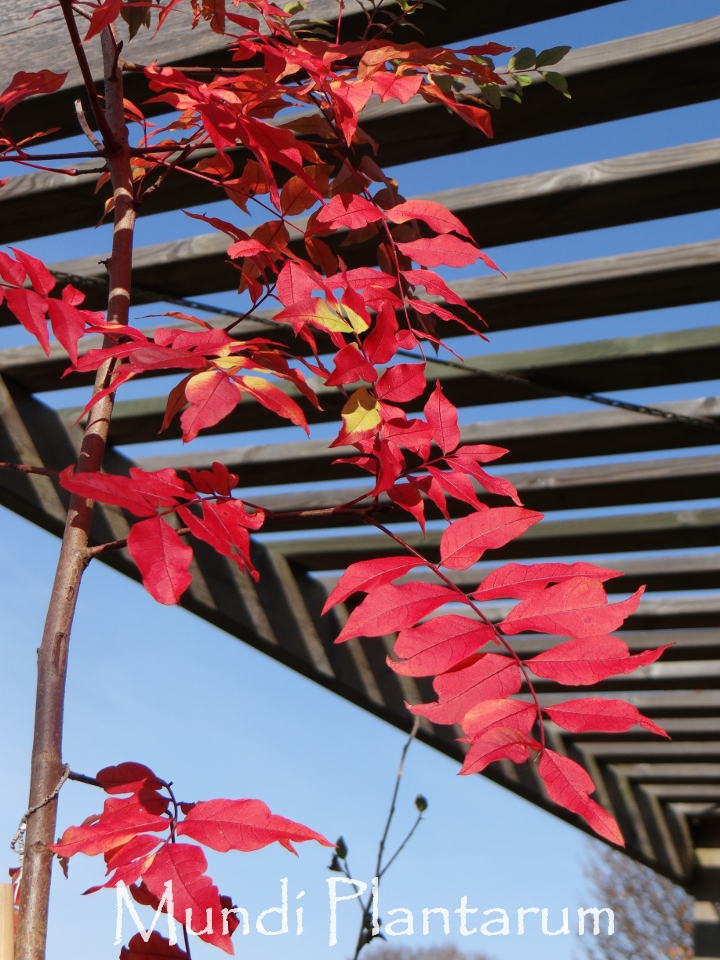
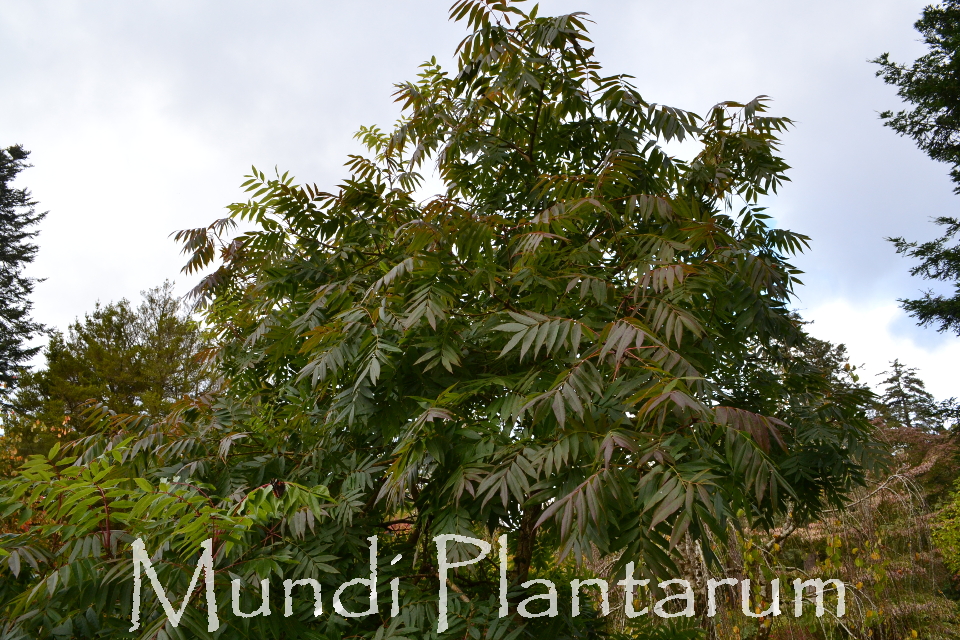
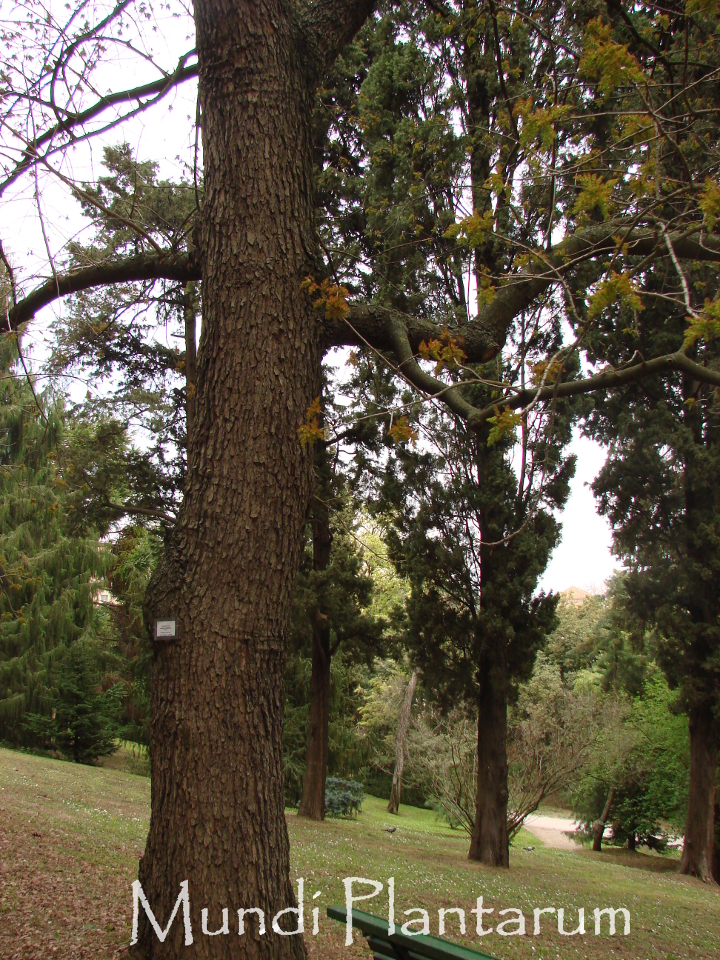
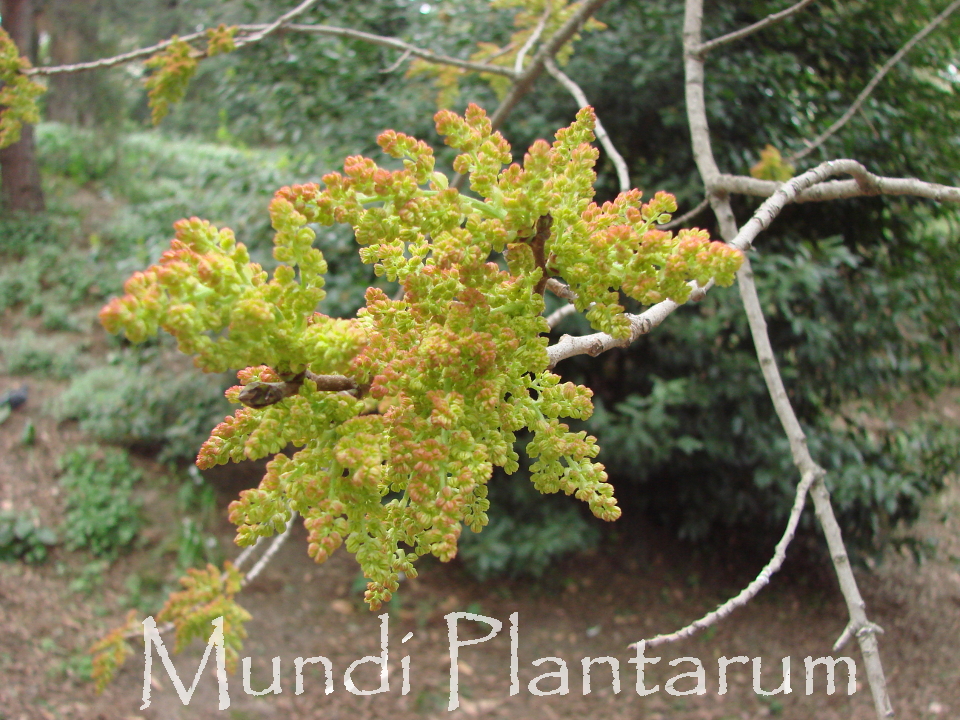
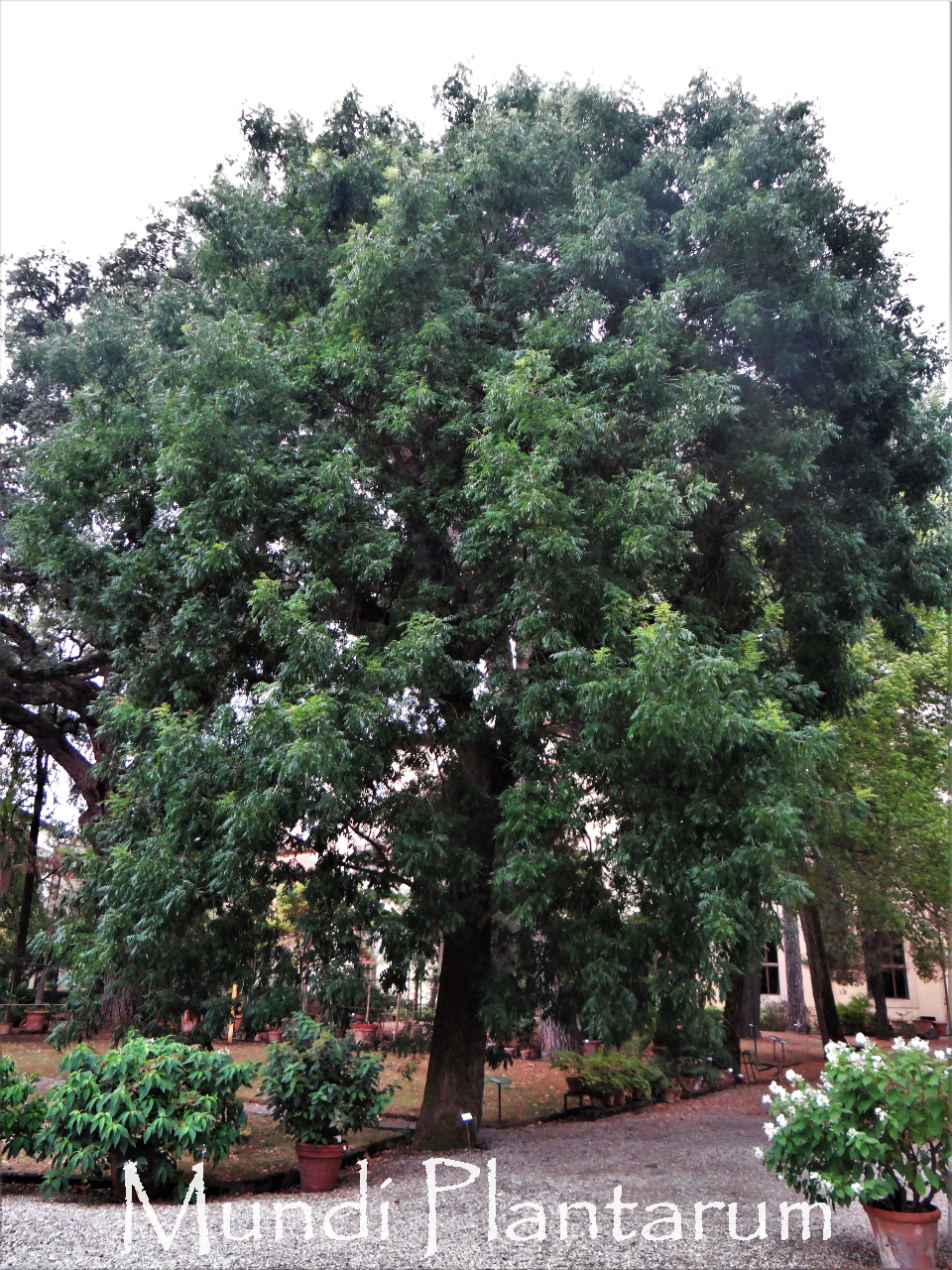
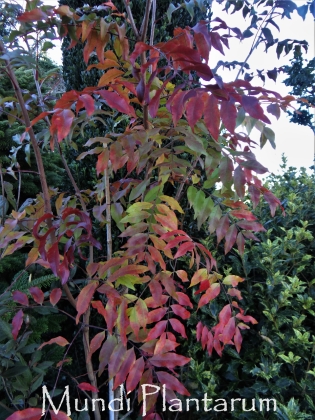
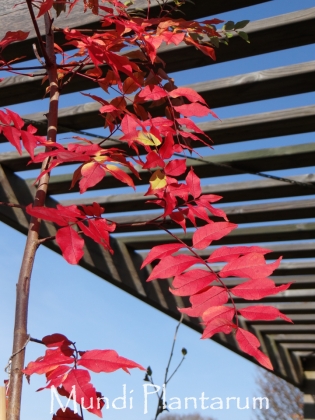
Chinese pistachio tree with bright red foliage in autumn. Generous and dense crown. Height 20m.
Pistacia chinensis
Famille:
Anacardiaceae
Les jardins du florilège
Les jardins du florilège
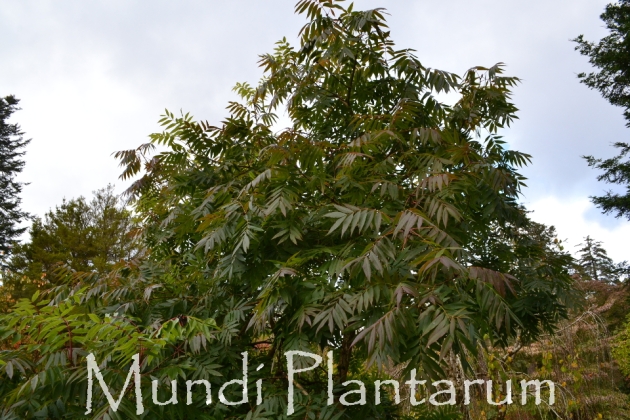
Flavien Saboureau
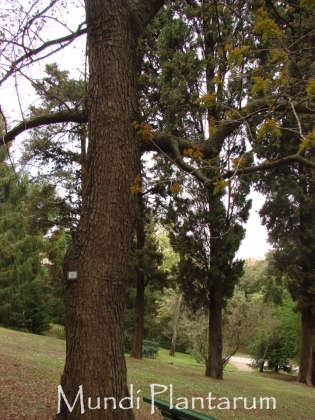
Les jardins du florilège
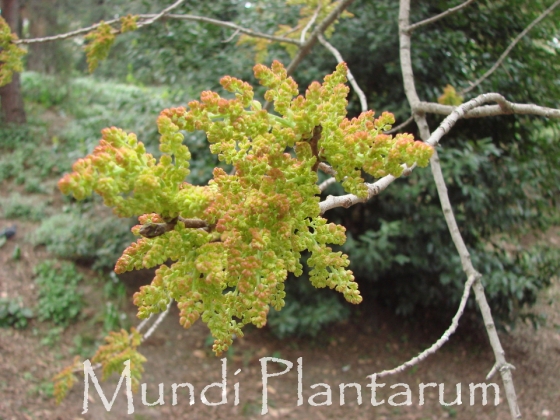
Les jardins du florilège
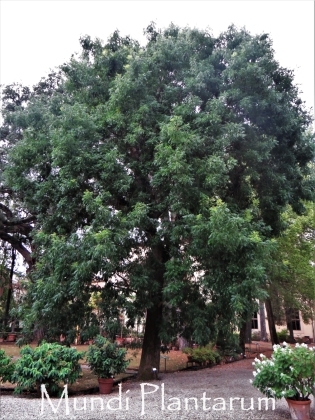
Les jardins du florilège
Classification
Trees and shrubsClimate
Zone 7: from -17°C to -12°CLeaf color
- Yellow
- Orange
- Red
- Green
Flower color
- Red
Sun exposure
- Sheltered winds
- Sunny
Size
5 to 10m
5 to 10m
Ornamental interest
- Foliage
Notable plant
- In autumn
Type de sol
- Neutral
Garden use
- Isolated
- Massif
GENERAL DESCRIPTION
- ORIGIN: Mountainous China.
- CLIMATE: The plant dies from -20.0 °C. The aerial parts are affected from -15.0 °C.
- EXPOSURE: Sunny.
- SOIL: Light and draining, neutral. Not too wet.
- GROWTH: It grows quickly and is easily transplanted.
- PATHOLOGY: No diseases or parasites to report.
- PROPAGATION: Herbaceous or semi-hardwood cuttings. Sowing from November to March, in a warm place (25°C) after vernalization for a minimum of one month.
- SIZE:
- USE: When planted alone, it can be used in urban plantings as it is quite drought-resistant.
- MERIT:
- COMMON NAME: Chinese Pistachio tree.
GENERAL PHYSIOLOGY
- DIMENSIONS: Can reach 10m in height with a spread of 8m to 10m in Europe. In its country of origin it can reach 20m.
- PORT: Small tree, round and symmetrical crown.
- TRUNK: Its trunk is dark grey and salmon-orange in the hollows of the ribs.
- BARK:
- BRANCHES: Its young branches are pubescent.
- NOTE: No toxicity to report.
- Pistacia chinensis 'Keith Davey' - Selection with more intense autumn colours in orange tones.
- Pistacia chinensis 'Sarah's Radiance' - Selection with more intense autumn colours in purple tones.
PHYSIOLOGY OF LEAVES
- FORM: Deciduous, alternate leaves, 15 to 25 cm long, paripinnate compound, with 5 to 6 pairs of oval-lanceolate leaflets.
- COLOUR: Green, very beautiful colours in autumn yellow-orange or bright red.
- NOTE: Deciduous foliage.
PHYSIOLOGY OF FLOWERS
- TIME: In April-May. (before or during leafing).
- FORM: In panicles. The male inflorescences (5 to 10 cm) are shorter than the female ones (15 to 25 cm).
- COLOR: Red
- NOTE: Dioecious flowering. Therefore, a male and a female plant are necessary to obtain fruit. Flowering is insignificant.
PHYSIOLOGY OF FRUIT
- SHAPE: an ovoid drupe approximately 5 mm in diameter.
- COLOUR: Red in colour, then purple and finally bluish when ripe.
- SEEDS:
- NOTE :