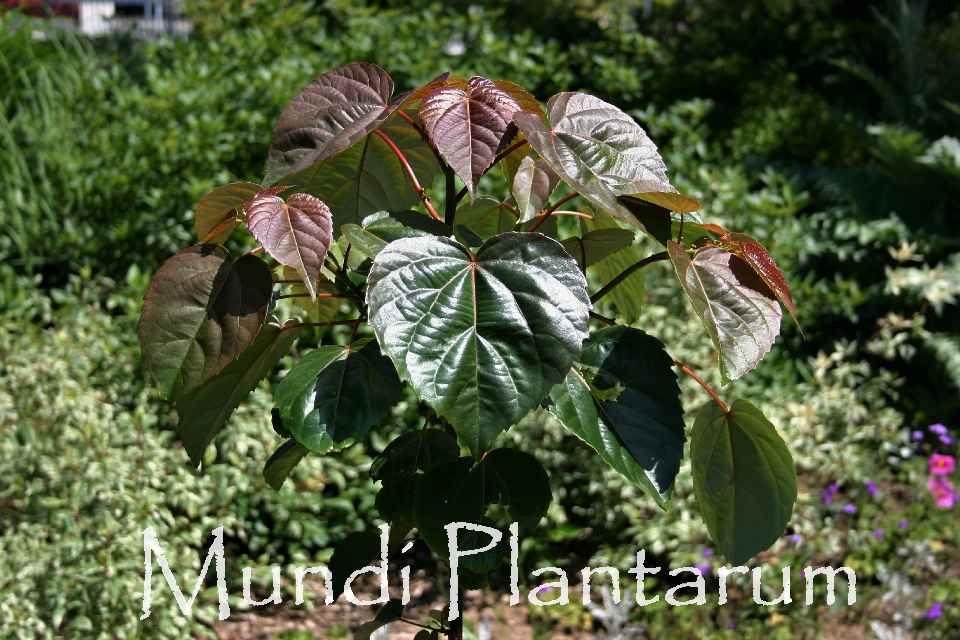
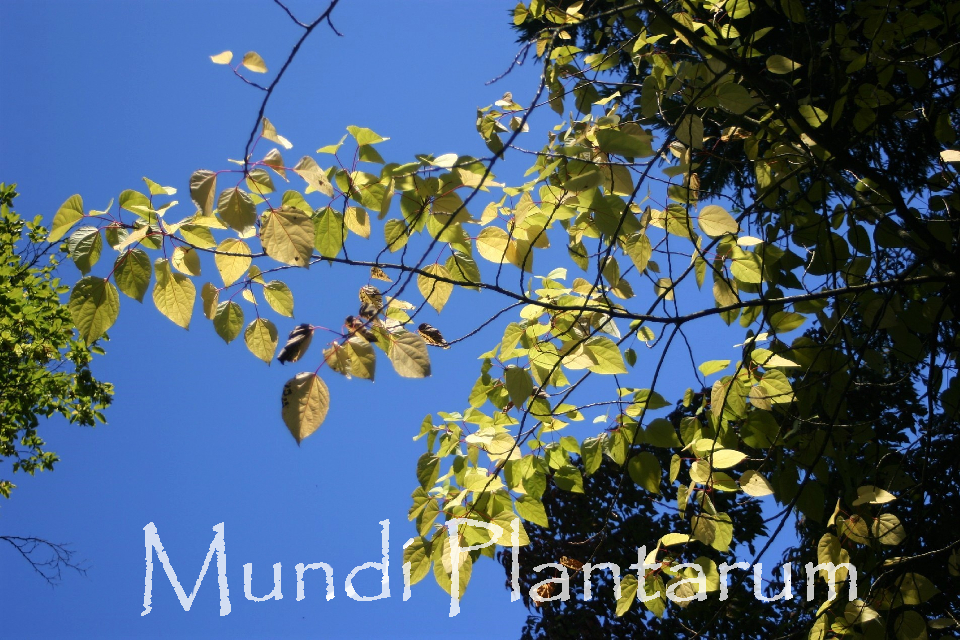
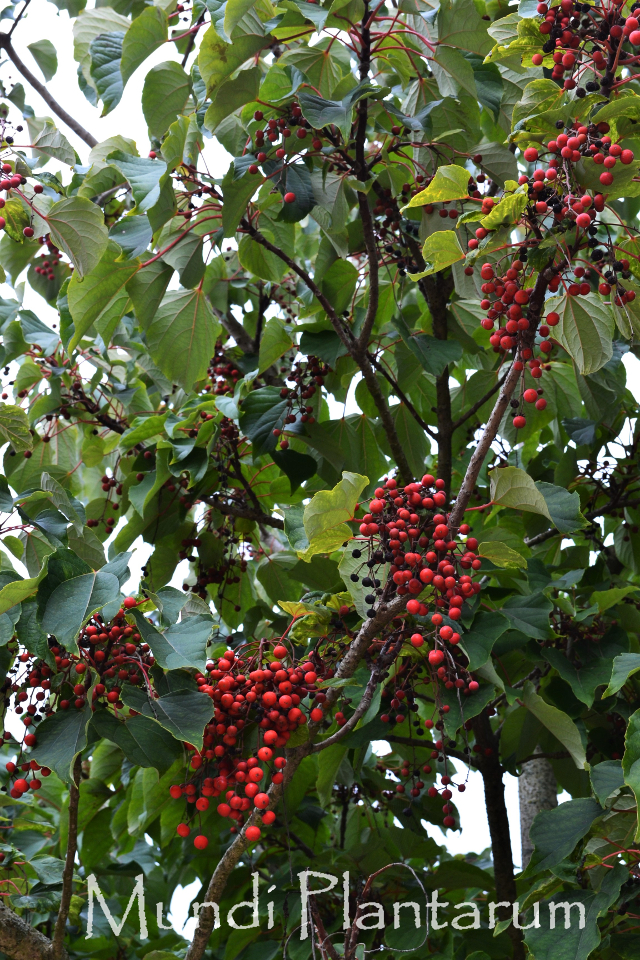
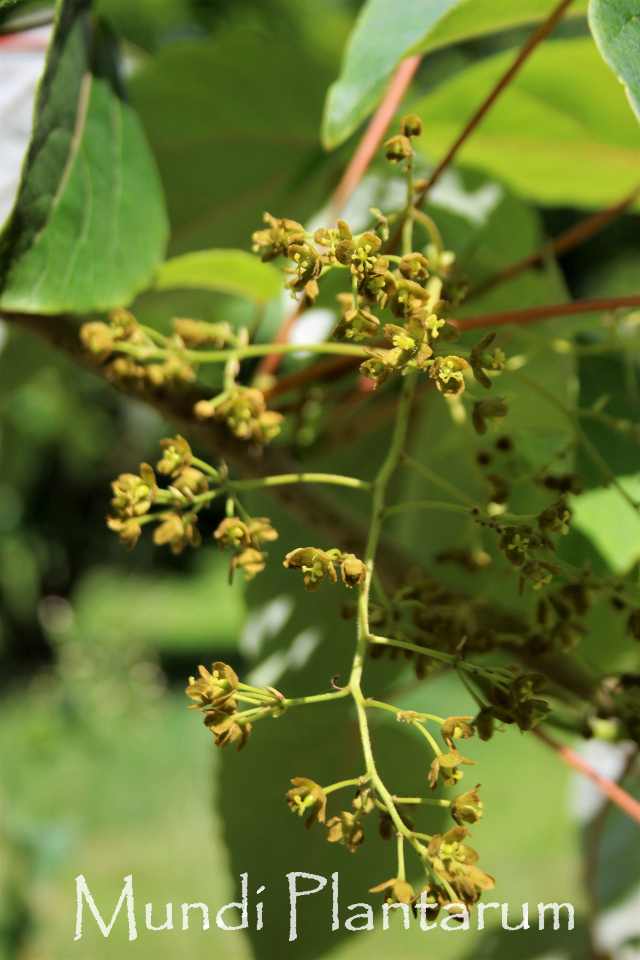
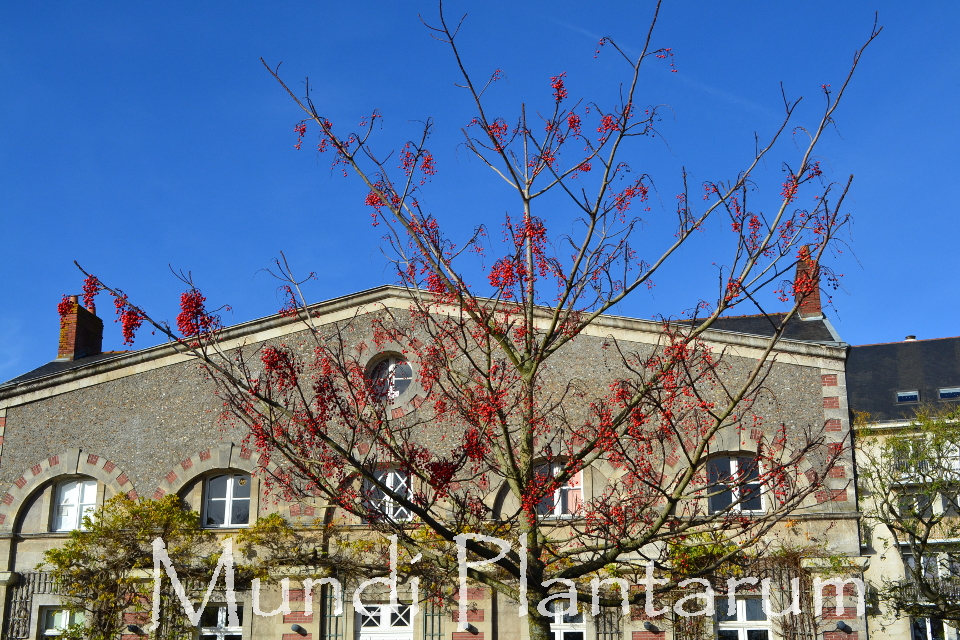
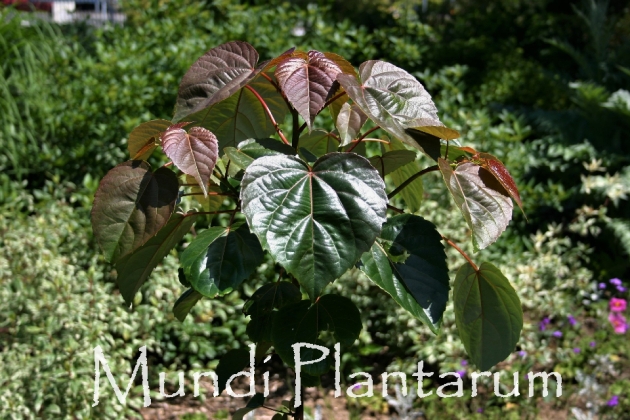
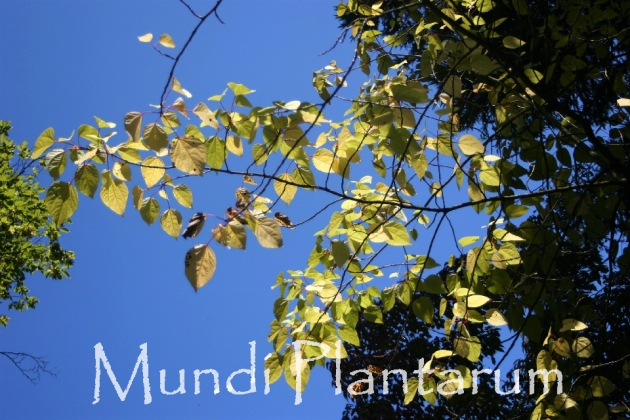
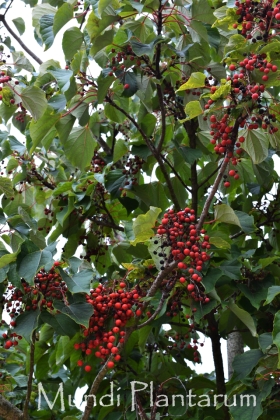
Large, heart-shaped, glossy dark green leaves that turn yellow in autumn. In summer, it is covered with panicles of small, fragrant, yellow-green flowers, followed by clusters of scarlet berries.
Idesia polycarpa
Famille:
Salicaceae
Synonymes:
Idesia polycarpa (var.) intermedia
Cathayeia polycarpa
Olivier van Sante
Olivier van Sante
Flavien Saboureau
Olivier van Sante
Flavien Saboureau
Classification
Trees and shrubsClimate
Zone 8: from -12°C to -7°CLeaf color
- Green
Sun exposure
- Sheltered winds
- Sunny
Size
10 to 15m
2 to 5m
Ornamental interest
- Fruit
Type de sol
- Acidic
- Neutral
Garden use
- Isolated
- Massif
GENERAL DESCRIPTION
- ORIGIN: Asia, Korea, Taiwan, Central and Western China.
- CLIMATE: Withstands temperatures down to -15°C.
- EXPOSURE: Sunny to partial shade.
- SOIL: Does not tolerate limestone, well draining.
- GROWTH: Rapid.
- PATHOLOGY:
- PROPAGATION: Sowing.
- PRUNING:
- USE:
- MERIT:
- SYNONYM: Idesia polycarpa (var.) latifolia, Idesia polycarpa (var.) polycarpa.
GENERAL PHYSIOLOGY
- DIMENSIONS: Can reach 10 m high by 5 to 8 m wide.
- PORT: Fairly wide and conical crown, the port is spread out.
- TRUNK: Straight
- BARK: Smooth, green and gray on older trees
- BRANCHES: The branches are tiered and horizontal, well ventilated.
- NOTE: A male and a female tree must be planted to obtain fragrant flowering and fruiting.
PHYSIOLOGY OF LEAVES
- SHAPE: Large heart-shaped leaves, 10 to 20 cm.
- COLOUR: Glossy dark green that turns yellow in autumn. The leaves are borne on a long red petiole.
- NOTE: Deciduous foliage.
PHYSIOLOGY OF FLOWERS
- Time: May-June
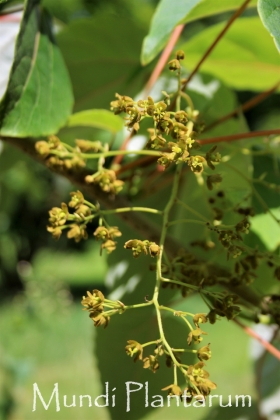
- SHAPE: In a panicle 15 cm long. Hanging.
- COLOUR: Yellow-green.
- NOTE: Fragrant flowers. Some plants are dioecious and others are hermaphroditic... The sexuality of this species is still very unclear. When the flowers have stamens and pistils, the tree is hermaphroditic and therefore self-fertile. A male plant cannot bear fruit. There are plants that exhibit parthenocarpy, and it wouldn't be surprising if this species did... so it would be plausible that a strictly female plant could produce fruit without necessarily involving male gametes. However, we have to wait for flowering to know for sure, but we can be certain that it is not a male plant if it produces fruit.
PHYSIOLOGY OF FRUIT
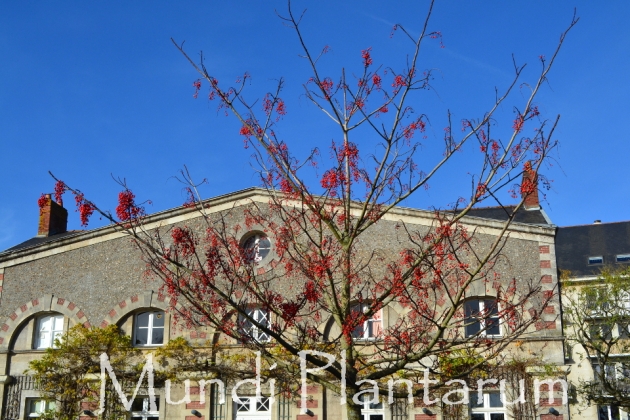
- FORM: In clusters of small berries.
- COLOUR: Red.
- NOTE: Persists throughout the winter.