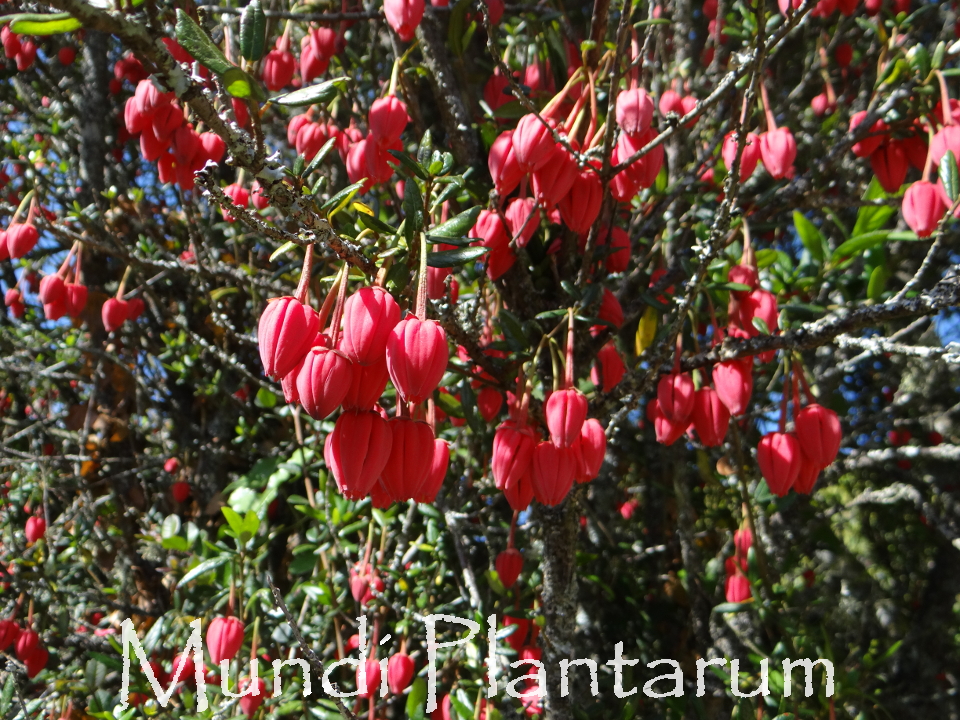
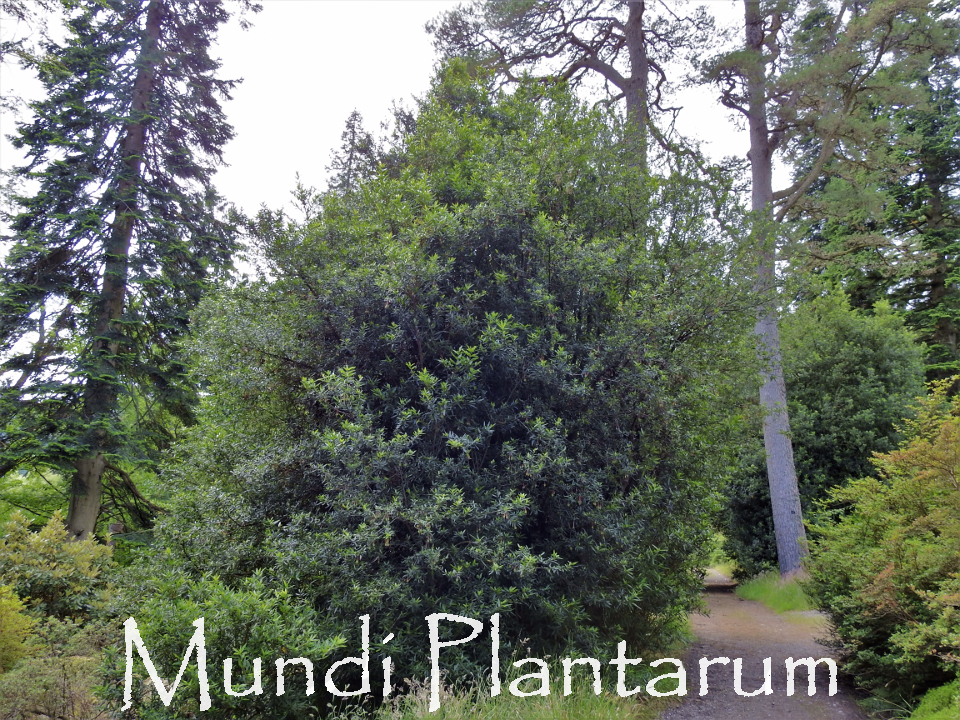
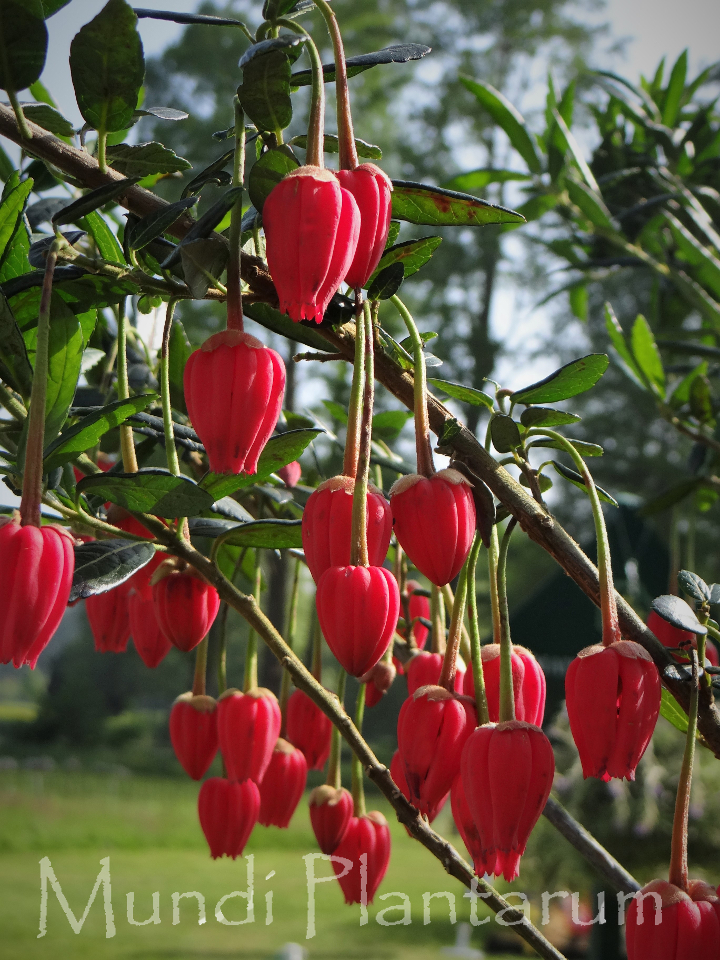
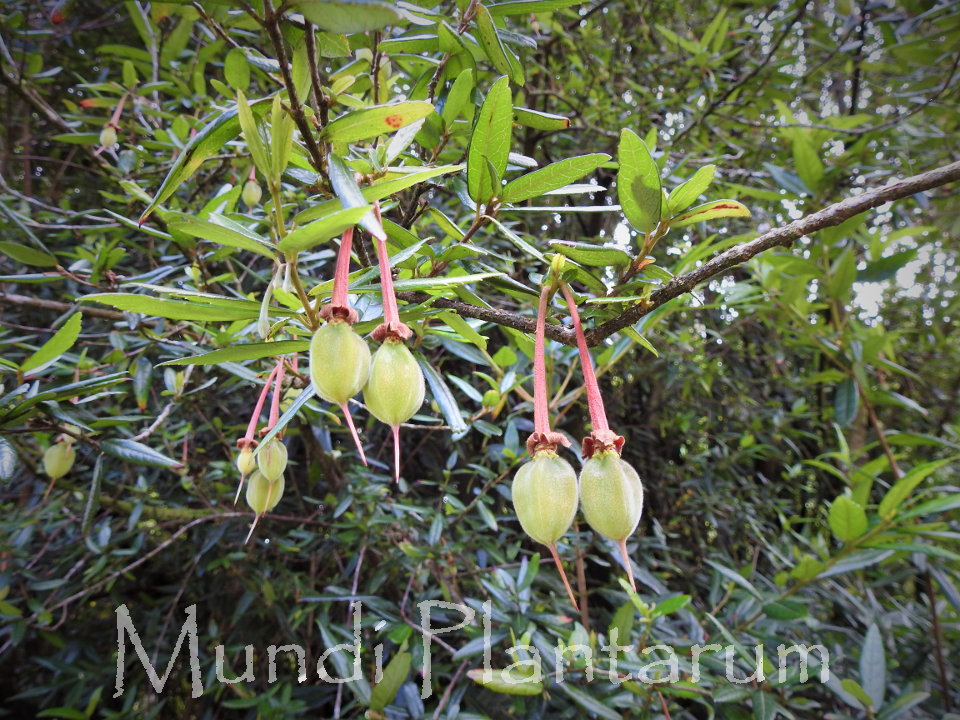
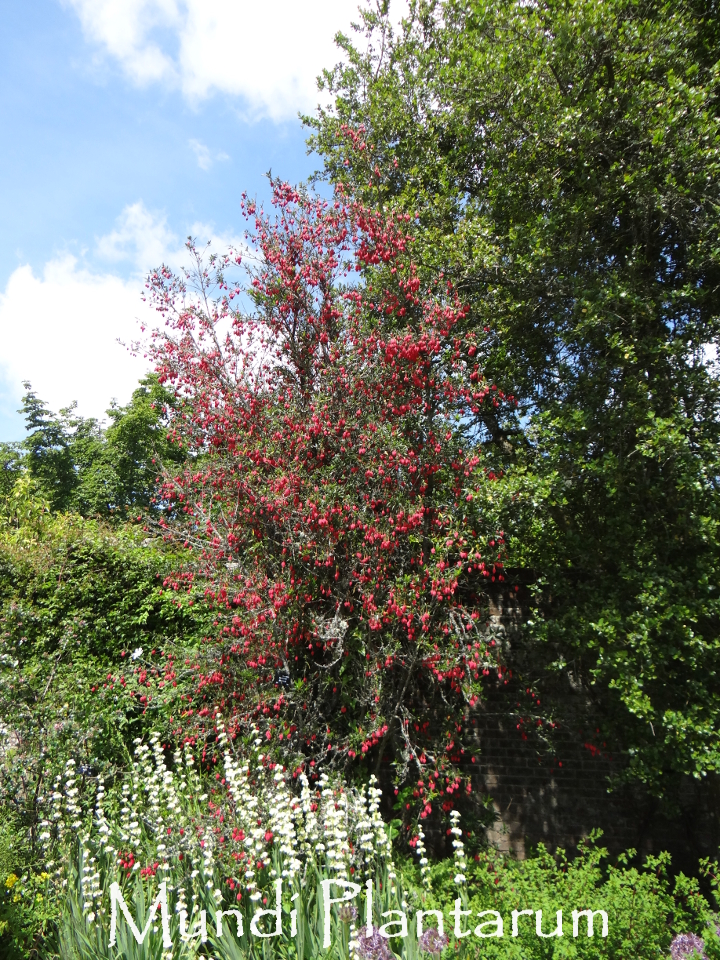
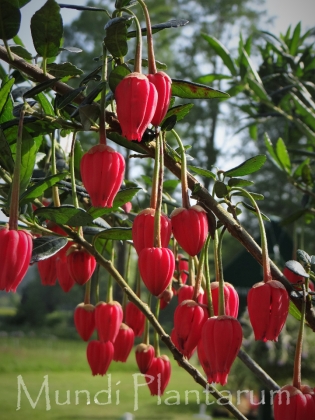
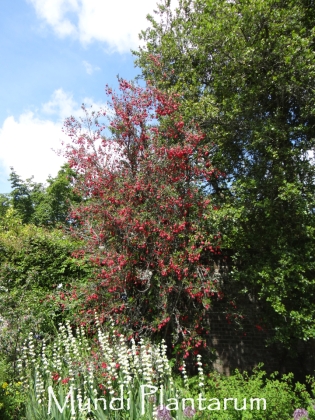
An exotic-looking shrub with evergreen foliage and very attractive drooping red bell-shaped flowers. Height of 3 to 4m.
Crinodendron hookerianum
Vernacular name:
Chilean Lantern Tree
Famille:
Elaeocarpaceae
Synonymes:
Tricuspidaria lanceolata
Les jardins du florilège
Les jardins du florilège
Les jardins du florilège
Les jardins du florilège
Les jardins du florilège
Les jardins du florilège
Classification
Trees and shrubsClimate
Zone 9: from -7°C to -1°CLeaf color
- Green
Flower color
- Red
Sun exposure
- Sheltered winds
- Part shade
Size
3 to 5m
2 to 5m
Ornamental interest
- Evergreen
- Flower
- Fruit
Notable plant
- In summer
Other uses
- Food - Fruit
Garden use
- Pot and tray (terrace and balcony)
- Cold greenhouse
GENERAL DESCRIPTION
- ORIGIN: This plant, native to southern Chile, was introduced to Europe in 1848.
- CLIMATE: The plant dies at temperatures below -7.0°C, while the above-ground parts are affected at -3.0°C. Late frosts can damage young shoots and flower buds. In colder regions, this plant should be grown in pots or in a cool greenhouse. High humidity is strongly recommended. Planting in an area where mist and fog are frequent is encouraged. Excessively dry air and a windy location can significantly reduce the lifespan of this shrub.
- EXPOSURE: Partial shade.
- SOIL: Requires acidic, peaty, cool, light soil. Mulching around the base will be beneficial to prevent the roots from drying out.
- GROWTH: Slow.
- PATHOLOGY: Scale insects can infest this plant. Consequently, sooty mold can also be a problem.
- PROPAGATION: Herbaceous cuttings in June or tip cuttings in July-August, under cover, with hormones and bottom heat. Note that seeds obtained in Europe are rarely viable.
- PRUNING: It is important to prune it lightly after flowering. The branches can be lightly cut back in spring to encourage a denser shape.
- USE: This plant is grown in pots or unheated greenhouses, and outdoors only in frost-free regions. In milder climates, it can be planted in a sheltered spot and protected with mulch in winter.
- MERIT: Award for merit in gardening from the Royal Horticultural Society of England.
- NOTE: It is regularly found at nurseries and online garden centers.
GENERAL PHYSIOLOGY
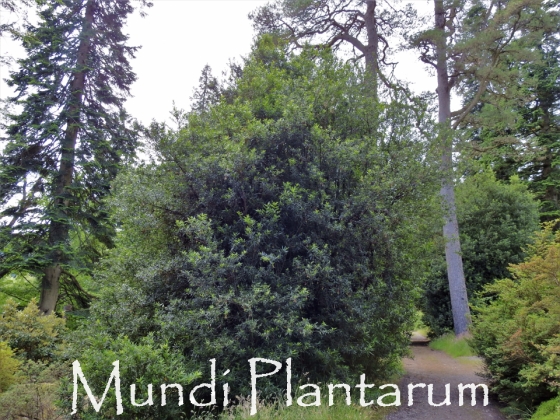
- DIMENSIONS: It can reach a height of 9 m in its native country. In cultivation, it will not exceed 3 to 4 m in height.
- HABIT: Initially shrubby, it spreads out with age.
PHYSIOLOGY OF LEAVES
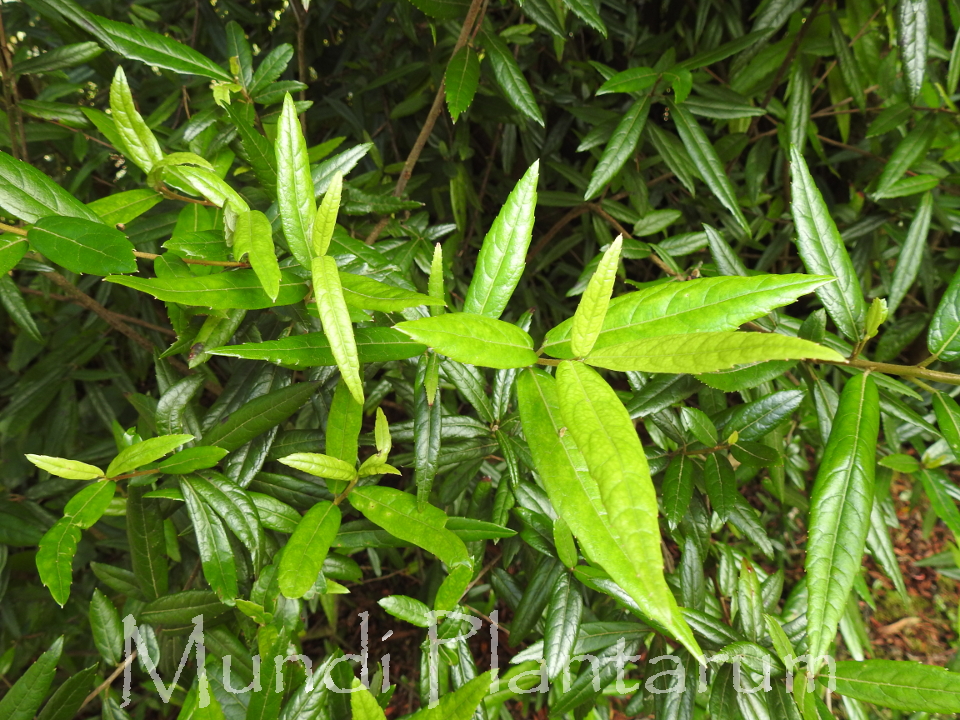
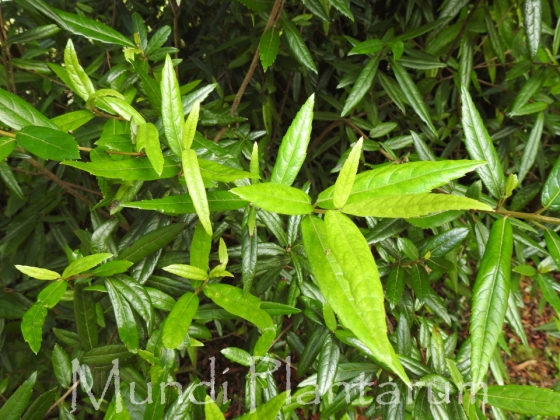
- SHAPE: The leaves are alternate, petiolate, oblong to lanceolate, 30 to 75 mm long, coarsely toothed. They are also leathery.
- COLOUR: Dark green. The limb is waxy and pubescent on the reverse.
- NOTE: Evergreen foliage.
PHYSIOLOGY OF FLOWERS
- PERIOD: May-September.
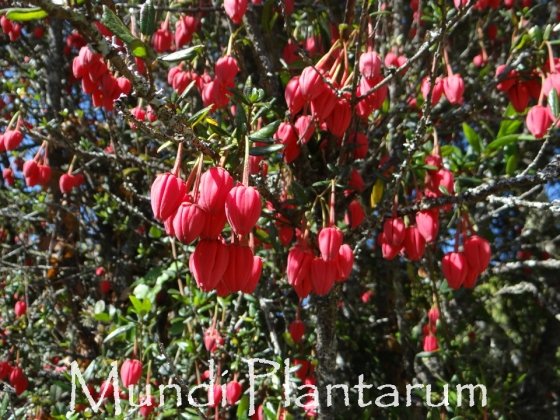
- FORM: The flowers are axillary, solitary or grouped in pairs, lantern-shaped, with fleshy, drooping petals, long-pedunculated.
- COLOUR: Vermilion red.
- NOTE: The shrubs flower after 5 years and the flowering lasts 6 weeks.
PHYSIOLOGY OF FRUIT
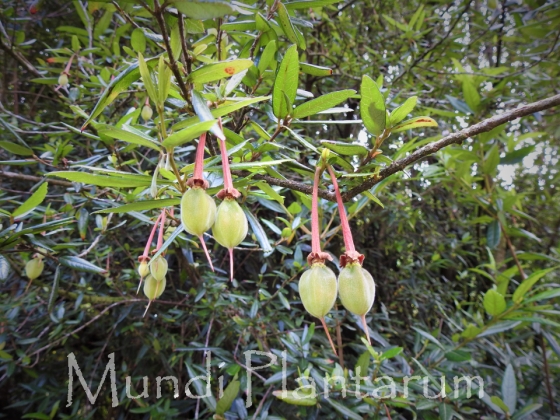
- FORM: The fruit is a capsule that opens by 3, 4 or even 5 valves and contains 3 to 4 seeds per compartment.
- NOTE: No toxicity to report. The fruits are even edible, green like a hairless kiwi, and with white pulp.