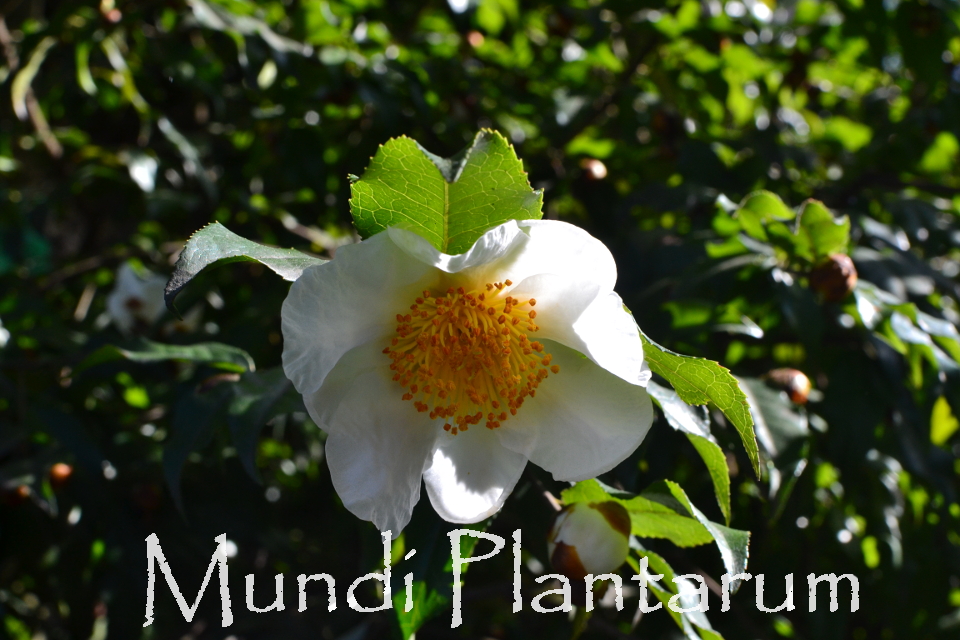
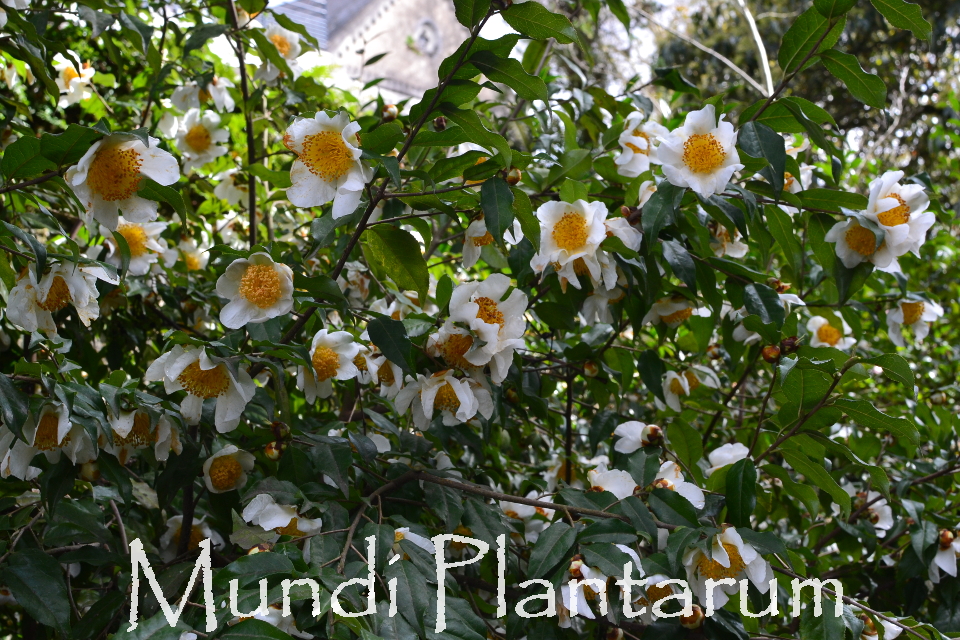
Cultivated for its very attractive cinnamon-colored bark with a smooth texture and its white autumn flowers.
Camellia yunnanensis
Vernacular name:
Camélia du Yunnan
Famille:
Theaceae
Synonymes:
Camellia acutiserrata

Flavien Saboureau
Flavien Saboureau
Classification
Trees and shrubsClimate
Zone 8: from -12°C to -7°CLeaf color
- Green
Flower color
- White
- Yellow
Sun exposure
- Sheltered winds
- Part shade
Size
5 to 10m
2 to 5m
GENERAL DESCRIPTION
- ORIGIN: Originating in CHINA: southwest Guizhou, southwest Sichuan, Yunnan.
- CLIMATE: Hardy to approximately -12°C. Generally, they prefer mild and humid conditions.
- EXPOSURE: Plant in partial shade, sheltered from cold winds. However, they will grow readily with early morning sun and afternoon shade.
- SOIL: Acidic, well-drained, rich in humus (pH 5-6.5). Mulch around the plants, avoiding the area around the stem; this will protect the roots and retain soil moisture.
- GROWTH: normal
- PATHOLOGY: Sap-sucking insects or white wax scale insects - spray to eradicate.
- MULTIPLICATION:
- PRUNING:
- USE:
- MERITE:
GENERAL PHYSIOLOGY
- DIMENSIONS: The shrub can reach 3 meters in height.
- HABIT: Well-branched shrub.
- TRUNK:
- BARK:
- BRANCHES: Pale brown to purplish brown twigs, pubescent.
- NOTE:
PHYSIOLOGY OF LEAVES
- SHAPE: Thin, slightly toothed, leathery leaves, 4–6.5 × 2–3.5cm, oval to elliptical.
- COLOUR: Dark green on top, pale green on the bottom.
- NOTE:
PHYSIOLOGY OF FLOWERS
- TIME: They produce their flowers from November to March, fruiting from August to October (China).
- FORM: Axillary or subterminal flowers, solitary, approximately 5 to 8 cm in diameter.
- COLOUR: White flowers with a yellow centre.
- NOTE: Lightly scented.
PHYSIOLOGY OF FRUIT
- SHAPE: Subglobose to globose capsule, purplish-red to brown, 4–6 cm in diameter, divided by five valves, each segment containing two to three seeds.
- COLOR:
- SEEDS :
- NOTE :